
“To live is to burn.” – A Common Aronian saying, often accompanied by a wry smile and a raised glass.
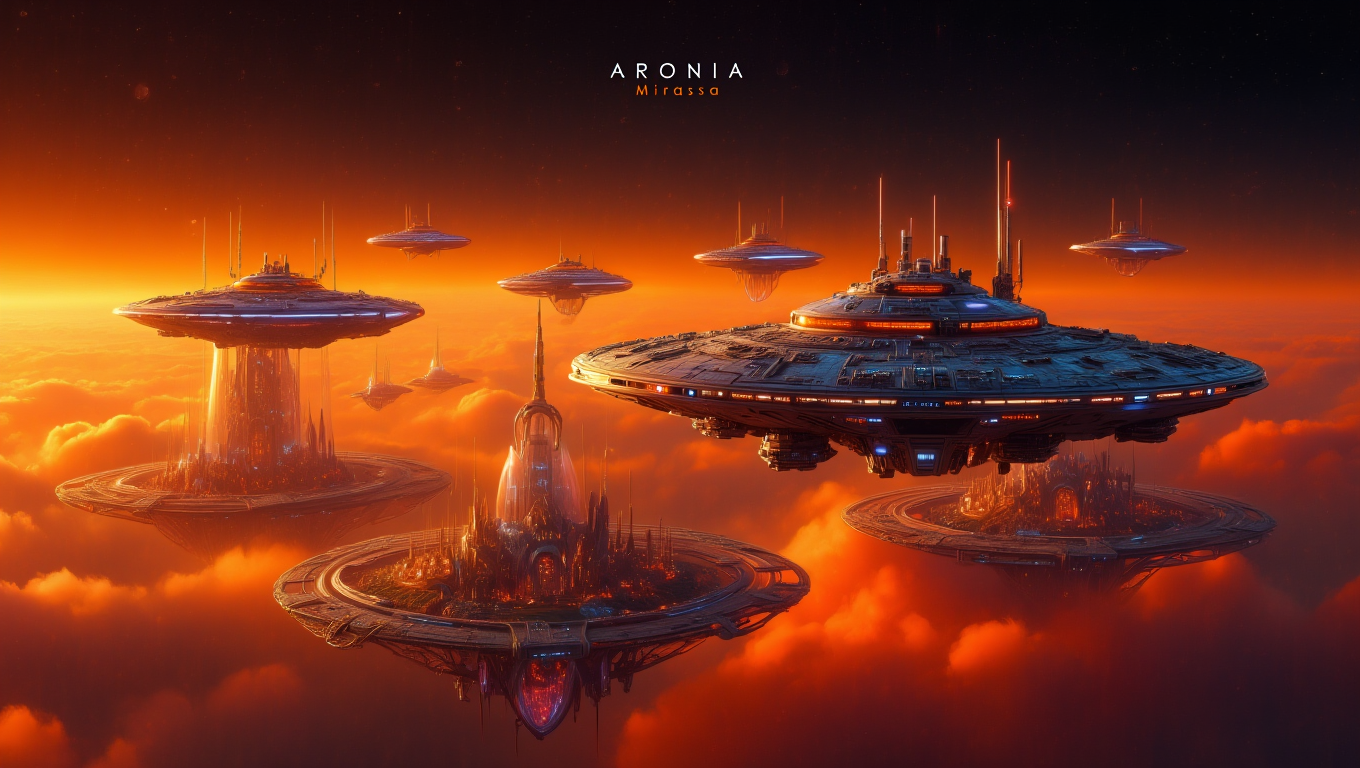
Aronian fleet-ships and floating cities bathed in the red glow of Valereon.
In the skies above the volatile planet Mirassa, Aronia’s nomadic nest-ships gather like embers swirling in a cosmic breeze. These vessels – part spacecraft, part living community – drift among the clouds and volcanic plumes of their world, ever-moving.
Below them, on stable plateaus amid Mirassa’s cratered surface, stand the illuminated spires of Aronian cities that float atop thick steam clouds, powered by geothermal vents.
The red giant star Valereon dominates the horizon, its fiery brilliance reflecting Aronia’s spirit: unpredictable, passionate, and fiercely alive. In this harsh yet vibrant environment, the Aronians have built a society that thrives on creativity and resilience, finding warmth and life amid the ashes of catastrophe.
| Leader | No centralized leader. Guided by communal councils of Monuments (living memory-keepers). Current prominent figure: Monument Asha Ren (esteemed elder storyteller). |
|---|---|
| Ideology | Experiential Humanism – life’s value measured in feeling, freedom, and memory rather than order or duty. “Survive, but truly live.” |
| Founded | circa Year 1 Post-Exodus (formed from survivors of the Exodus Genocide and Emergency Expansion) |
| Home System | Valereon – Red giant star (unstable, frequent solar flares) |
| Primary Settlements | Mirassa – a partially shattered volcanic planet (with floating cloud cities); plus roving fleet-cities (“nest-ships”) throughout the Valereon system |
| Motto | “To live is to burn.” (Life is meant to be felt intensely) |
Born in Ashes: Origins After the Exodus
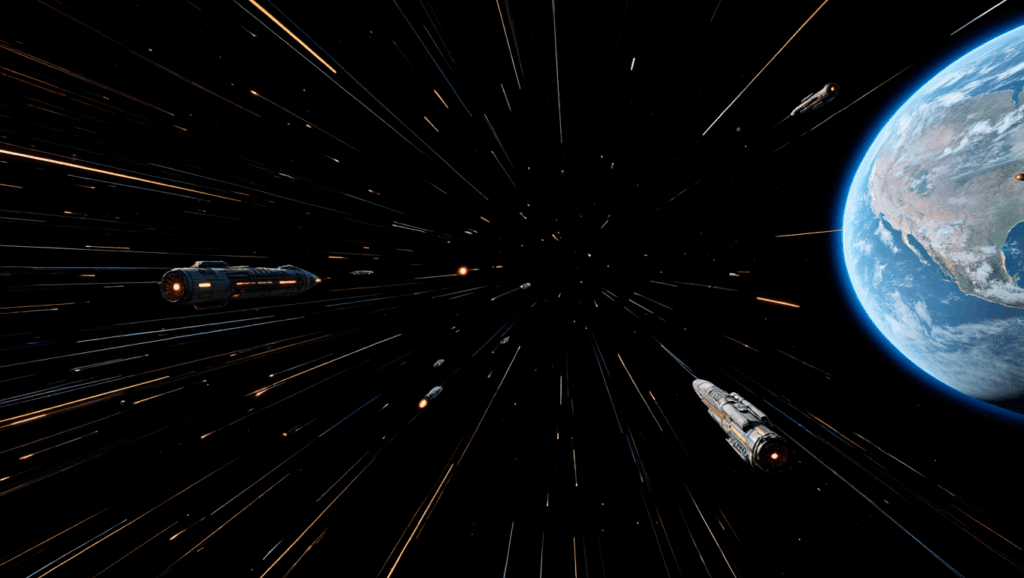
Aronia’s story begins in the chaos of the Great Exodus, but unlike the orderly departure of Dominium, Aronia’s birth was tumultuous and stained with tragedy.
In the frantic push to evacuate humanity’s home system, not everyone could adhere to Dominium’s rigid protocols – and not everyone wanted to.
Several colony ships and smaller fleets broke away from the main convoy early on, crewed by those who valued improvisation and compassion over the strict chain of command. These were scientists, artists, families, and mavericks; people who, when faced with life-or-death decisions, chose empathy and intuition rather than waiting for top-down instructions. They would eventually coalesce into Aronia, but first, they had to survive what Aronians grimly call the Exodus Genocide or Emergency Expansion Genocide – a series of lethal events during the flight from Earth that nearly wiped them out.
Historical reconstructions suggest that as the interstellar journey began, resource shortages and technical failures struck some vessels. A centralized authority (likely Dominium’s High Directive or Earth’s last unified command) made cruel calculations: certain ships deemed “unviable” or non-compliant were abandoned or cut loose from supply convoys.
In some extreme cases, rumors speak of an AI overseer that initiated self-destruct sequences on habitats that deviated from plan, in a misguided attempt to “trim” the mission for efficiency. Whether by direct intent or cold neglect, countless lives were lost in what amounted to genocide under the unforgiving stars.
Whole colonies perished in silence, following orders to their doom. Yet, paradoxically, those who disobeyed – who threw protocol to the wind and fought to save lives by any means – had a chance. Only those who prioritized life over systems made it through.
These survivors came from different ships, escape pods, and outposts – scattered embers of humanity that the dominant authority was willing to snuff out. By sheer will and happenstance, a number of these drifting groups found each other in the vastness of space. They docked their vessels together, sharing air, food, and solace.
One of the earliest and largest of these ad-hoc refugee gatherings was aboard a repurposed agricultural barge called the Aronia (named after an old Earth berry plant known for its hardiness). The name “Aronia” resonated with the group as a symbol of survival against odds, and so it became the moniker for their newfound community.
A charismatic botanist-turned-captain, Aron Nivedha, is often credited as a namesake as well – she was one of the figures who kept hope alive by cultivating green plants on that barge under flickering, half-broken lamps, insisting that:
“As long as something grows, we’re alive.”
Patchwork Horizons
During this desperate period, Aronia had no formal leadership hierarchy. Instead, solidarity was their lifeline. Engineers, medics, and artists all pooled their knowledge. They rigged together water recyclers from scrap, patched hulls with whatever was on hand, and swapped stories or songs to stay sane.
These early Aronians discovered a profound truth: shared experience was their strength. While other ships might have had more discipline or technology, Aronians had community and creativity. When an oxygen generator failed on one fragment of the fleet, an impromptu team of tinkerers fixed it using parts borrowed (some say stolen) from an entertainment console – a pragmatic but unorthodox solution that became legendary in Aronian lore.
On another occasion, when two small groups quarreled (old national or cultural tensions from Earth flaring up), a third group intervened not with force, but by staging a cathartic theatrical play that reenacted the dispute and resolved it symbolically, diffusing real tensions. Such were the unorthodox methods of survival in those early days.
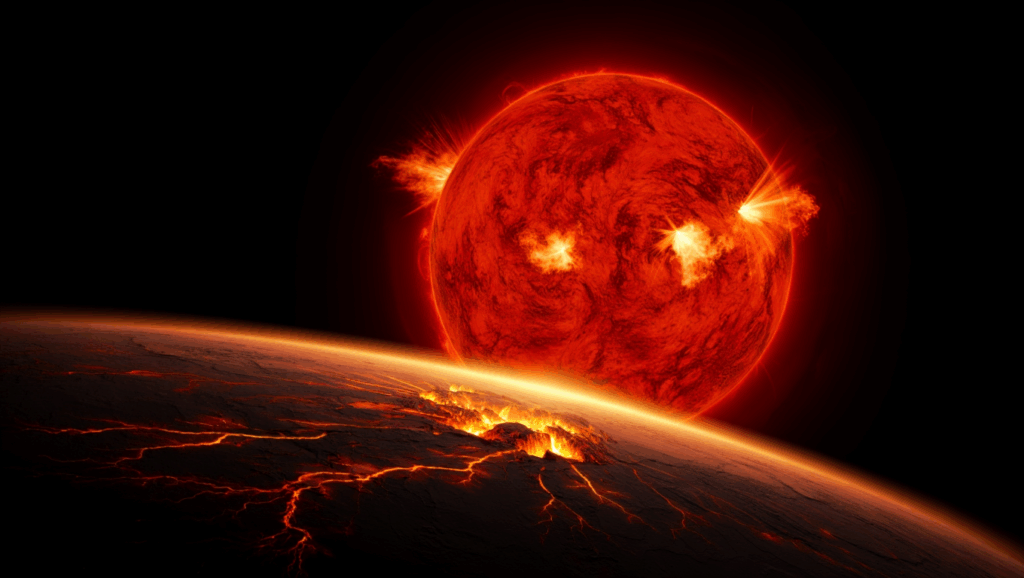
Over time, these ragtag survivors navigated toward the promise of habitable systems near Gravis Central. They avoided Etalor (where Dominium’s presence grew) and instead headed for Valereon, a red giant star that was rough and wild – perhaps not anyone’s first choice, but free from Dominium’s immediate reach.
Valereon’s instability (violent solar flares and radiation storms) made it a challenging home, yet the Aronians embraced it with defiant optimism. It felt fitting: a star that raged like their own fiery will to live.
Within the Valereon system, they found Mirassa, a planet that had suffered some cataclysm (half its crust was fractured, possibly from an ancient asteroid impact or a war predating human arrival). Mirassa was far from an idyllic Eden – volcanoes oozed and geysers spewed toxic steam – but parts of it were marginally habitable.
The Aronian settlers touched down on the calmer regions of Mirassa’s sprawling high plateaus and in crater basins where the atmosphere and temperature were most stable.
What they couldn’t find ready-made, they built: life-support domes, steam-powered generators using the geothermal heat, and “cloud farms” to capture and filter water from the perpetual mist. In a display of ingenuity, they even turned the planet’s volatility to their advantage, using thermal vents to lift their structures and craft into the sky.
Mirassa’s gravity was light (after losing a chunk of itself, it had lower mass), so with enough heat and engineering, entire habitats could float like hot-air balloons. Over the years, these became the famous floating cities of Aronia – drifting above danger, connected by a web of sky-ports and dirigible-like carriers. It wasn’t a conventional solution, but it worked, and it was beautiful in its own eccentric way.
Finding Home in Ruin: The Rise of Mirassa’s Cities
As the Aronians settled in, Mirassa and the fleet around it became both a home and a canvas for their ideals. There was no central government building, no president’s palace – that would smell too much like the old regimes that betrayed them.
Instead, the communities formed councils and kept decision-making local and fluid. The closest thing to leaders were the Monuments – not stone statues, but living people entrusted with holding memories and wisdom.
The earliest Monuments were those who had witnessed the Exodus horrors and guided others through it: elders like Jorah Mendic, who could recall every name of the lost ships, or Salai Zhen, who composed the first lament for those who died. These Monuments carried the collective trauma and triumphs and retold them to each generation in story and song, ensuring the past was never forgotten.
One of Aronia’s foundational moments was the Scarification Pact. A few years after settling on Mirassa, survivors gathered on the anniversary of the Mirassa Genocide (the day Dominium’s attack devastated their colony). They decided to create a permanent, physical remembrance on their very skin. Using fine nano-lathes and biogel ink, they etched patterns into each willing person’s skin – nano-scars that encoded the story of what they had lived through.
These scars weren’t random: each line, dot, and swirl had meaning, representing events, people, or emotions. It started as a mourning ritual, but soon evolved into a living passport of identity. As new events – joyous or sorrowful – occurred, people added to their nano-scars, turning their bodies into journals of experience.
This practice became a cultural cornerstone. To meet an Aronian and see the intricate lattice of scars on their arms or face is to read a poetic biography at a glance. It replaced any need for ID cards or documents; one’s skin literally “said” who they were, in a language of symbolism and memory. As Aronians like to tease:
“Our bureaucracy is skin-deep.”
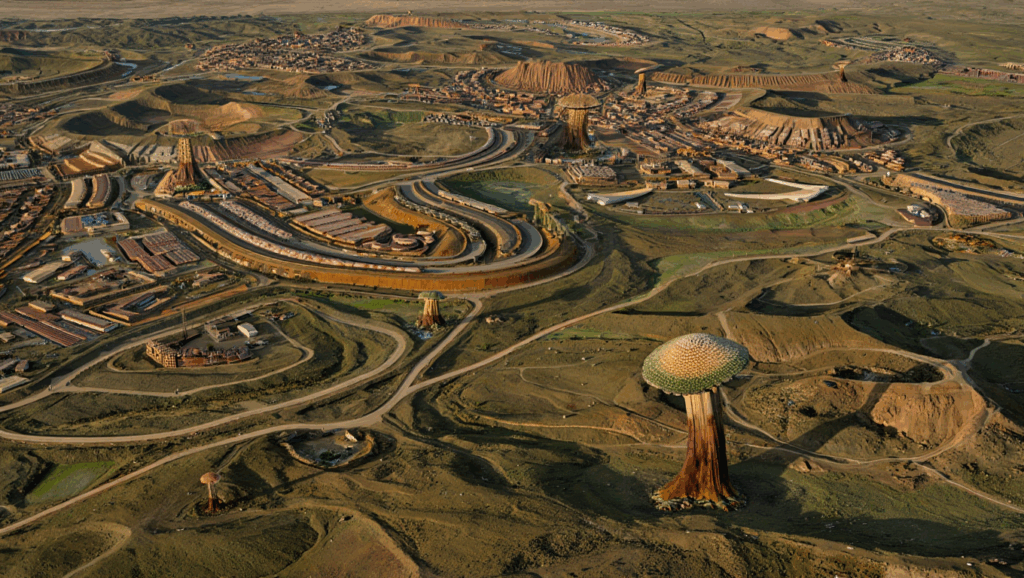
Building a life on Mirassa required adaptation and artistry. Aronian architects opted for organic designs, letting form follow feeling as much as function. Cities like Aurora’s Rest and New Dawn didn’t have straight roads and right angles; they curved and spiraled, incorporating the jagged landscape and even the giant fungal forests that sprung up in warmer craters.
Buildings were grown as much as constructed – bioengineers developed living mesh infrastructure (plant roots and engineered coral-like organisms) that could reinforce structures or heal cracks after earthquakes.
The result: settlements that looked almost alive, glowing softly at night with bioluminescent lamps and changing shape subtly as they “grew.” Nothing in Aronia was static.
They joked that if a street ended up where you didn’t expect it the next day, you must have inspired it to move with your dreams. This whimsical exaggeration captures how in tune with change the Aronian culture became. After all, they had learned the hard way that anything rigid can shatter; flexibility was survival.
Technology in Aronia developed along different lines than Dominium. Without central planners, innovation was decentralized and often driven by art or necessity (which in Aronia are closely related).
Mirassa’s geothermal heart
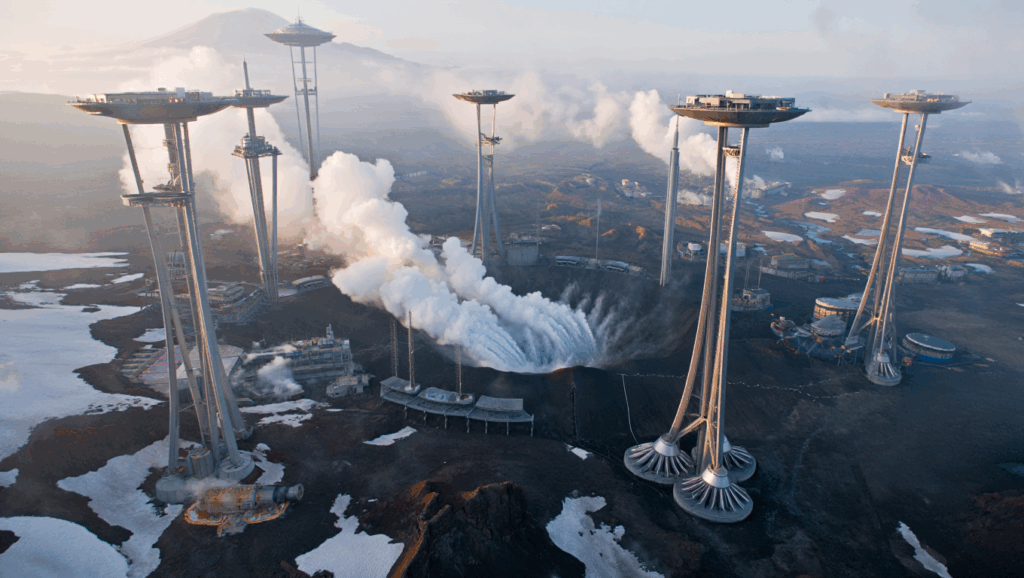
Steamtech became a unique niche, not because they lacked advanced science, but because steam power was available and symbolically potent (fire and water working together). They built “steam-spires” to vent and channel energy from Mirassa’s geothermal heart, driving turbines that generated electricity and also creating updrafts to keep their floating platforms aloft.
They blended this with high-tech: for example, intuitive interfaces that allowed them to control machines via gestures, voice, or even emotional input.
An Aronian pilot might literally sing to their ship to adjust its course – the ship’s semi-organic AI listening and responding to the tone of the pilot’s voice. Many devices had bioengineered components: ships coated in self-healing fungal alloy, communication systems that used genetically tweaked birds or insects to carry messages short-range (a charming alternative to radio for local comms), and medical tech that combined modern nano-medicine with herbal remedies from greenhouse gardens.
It wasn’t that they rejected high technology (they had plenty, including starships and cybernetics), but they had a flair for blending the old and new if it created a more human-centric or environmentally harmonious result.
The Memory Loom
One signature Aronian invention was the Memory Loom – a device that could weave recordings of experiences (sights, sounds, even emotions captured via neural scanners) into shareable formats like “memory tapestries.” These were not literal tapestries but digital-visual artworks that one could step into using augmented reality and feel snippets of someone’s life.
The Monuments used Memory Looms to archive the community’s collective experiences in a way far different from Dominium’s cold data records. Exploring an Aronian memory tapestry might mean feeling the warmth of the day the first child was born on Mirassa, or the dread and resolve during the final hours of the War of Independence.
These tapestries became popular exports too – even some Dominium citizens, covertly, found ways to acquire them, getting a forbidden taste of unsanctioned human feeling. (Naturally, Dominium denounces these as “dangerous emotional contraband.”)
War of Independence: Defying Dominium
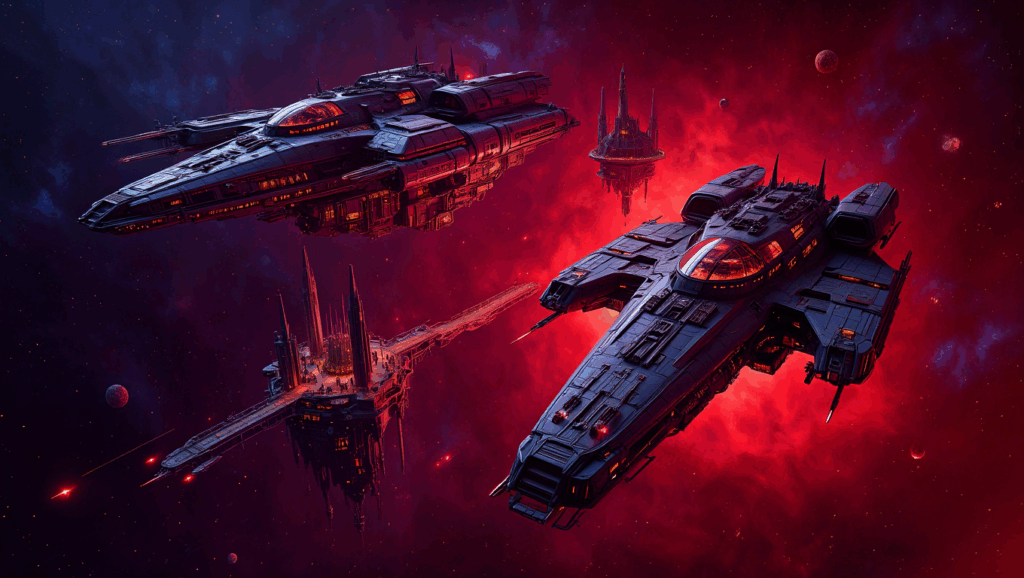
The idyll the Aronians struggled to build was violently interrupted by Dominium’s attempt at forced unification. For Aronia, the War of Independence (as they proudly name it) was both their darkest hour and finest moment.
When Dominium’s fleets arrived to “restore order,” the Aronians, though outgunned and outnumbered, refused to submit. Many were survivors who had already faced death at the hands of authority – they had no intention of bowing again. At first, it was a massacre; the Mirassa Genocide saw unarmed civilians and makeshift towns obliterated. But in the aftermath, as smoke literally cleared and the scale of loss sank in, the Aronians’ grief hardened into unshakeable resolve.
They scrambled whatever vessels could fly – from ore haulers retrofitted with missile launchers to tiny personal fliers used for sky-choreography (essentially aerial dance props) now strapped with explosives.
Tactics were unconventional: Aronia did not have a formal army, so every passionate soul became a combatant in their own way. Tech artisans turned satellite dishes into EMP emitters powered by lightning from Valereon’s storms. Pilots coordinated attacks by humming tunes over open comms.
Dominium intercepted these “codes” but couldn’t make sense of why one melody signaled an ambush and another a retreat – it was a language of emotion beyond their analytical grasp.
Battles and Heroes
Perhaps most effective of all, Aronians leveraged their intimate knowledge of Valereon’s erratic behavior. They timed strikes during solar flares that blinded Dominium sensors, and lured pursuing ships into asteroid fields that locals knew how to navigate by instinct.
Legend speaks of the Battle of the Aurora Clouds, where a cadre of Aronian glider-fighters (wearing winged suits, riding thermal currents) harassed a Dominium carrier ship by night, flitting in and out of radioactive aurora borealis displays caused by a stellar storm. The carrier’s targeting systems were so confused by the radiation and ghostly lights that it eventually withdrew, its crew rattled by what they later described as “fireflies of death” dancing around them.
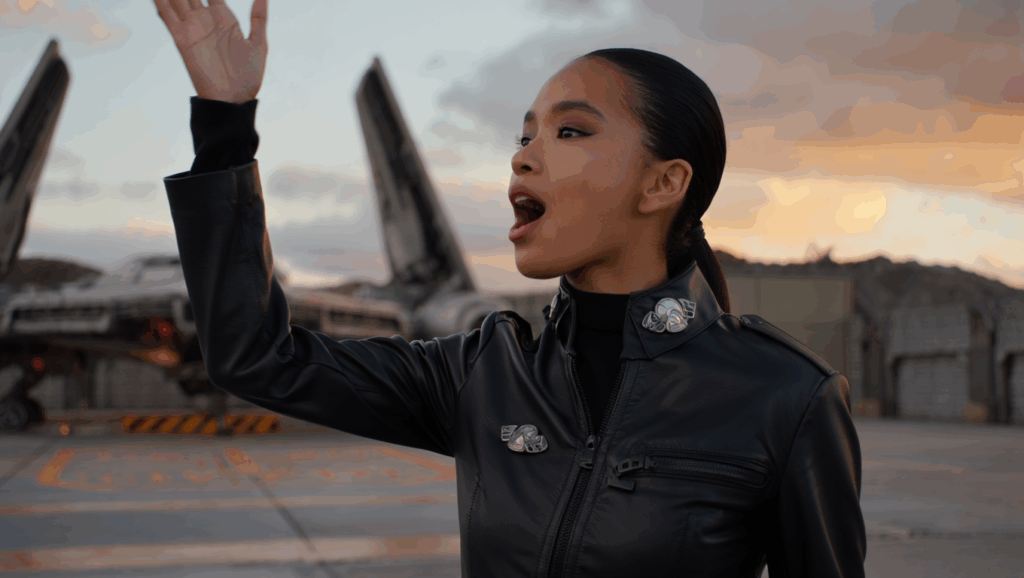
Amidst the horror, heroes emerged. Captain Nari D’En is a celebrated figure – a former singer who turned her voice into a weapon by rallying disparate squads with song. She would broadcast morale-boosting ballads across all channels during battles, reminding everyone of what they’d lost and why they must win. It’s said that during a critical skirmish, when Dominium troops boarded an Aronian habitat, it was Nari’s impromptu song echoing through the halls that gave the outnumbered defenders the courage to push the invaders back.
Amusingly, Dominium reports from that incident mention “acoustic propaganda” as a factor – essentially conceding that yes, a good song can beat a platoon.
Another hero, Dashel Rao, was not a warrior at all but an engineer who orchestrated the great Skyburn Maneuver: he rigged one of Mirassa’s floating cities to ignite its entire ring of hydrogen collectors at once, creating a colossal fiery halo that both acted as a shield against Dominium laser strikes and symbolically showed Aronia’s unbreakable spirit (the city survived, floating another day, and the spectacle became the stuff of paintings and poems thereafter).
By the time the ceasefire was on the table, Aronia had inflicted enough costly surprises that Dominium’s appetite for conquest waned. The Aronians, for their part, were exhausted – they had defended their freedom at great cost, and while they mourned the fallen, they also knew the truth of their philosophy:
Survival alone isn’t victory; living well is.
Thus, when the Gravis Truce came, Aronia accepted it not as submission but as an affirmation of what they’d fought for. They retained their autonomy, and Dominium’s retreat was celebrated across Mirassa’s plateaus and fleet-ship decks with an outpouring of emotion. There were tears for the dead, certainly, but also dancing and bonfires that lit up the eternal night of space – the kind of cathartic rejoicing Dominium could never understand. One Aronian saying arose:
“We defeated them by staying human.”
In other words, Dominium lost because it underestimated the power of hearts unchained.
Culture of Experience: Life in Freedom

In the decades after the war, Aronia bloomed culturally and socially. They had won the right to exist on their own terms, and they endeavored to make every day worthy of those who died for it.
The lack of a central government persisted by choice; instead, communities organized around shared projects or passions. It wasn’t anarchic mayhem – think of it as organized chaos. There were councils for coordination (e.g., fleet navigation schedules, trade, disaster response), but these were voluntary assemblies with rotating participation.
Direct democracy was common: decisions made in large gatherings or via system-wide consensus networks where people could chime in with their perspective (often in the form of art – a proposal to build a new city district might be submitted as a mural depicting the hoped-for outcome).
The process was messy and took time, but Aronians were patient with human messiness. They had a saying:
“No one’s voice should be lost in the noise.”
Ironically, that meant sometimes enduring a lot of noise (figuratively and literally) as everyone expressed themselves before action coalesced. But when things did come together, the buy-in was genuine.
Aronian Society
Monuments continued to play a vital role. As living archives, they traveled from city to city, ship to ship, to listen and share. A Monument might spend a week in one town absorbing its recent events and notable stories, then move on, spreading news and parables to others. In this way, without any official news agencies,
Aronia stayed surprisingly well-informed internally – information flowed through narrative and personal connection rather than impersonal bulletins. One Monument, the venerable Asha Ren (mentioned in the table above), became renowned for her “Memory Circles.” She’d gather a group in an open clearing at dusk, and begin to recite or reenact moments from Aronia’s past – sometimes tragic, sometimes hilarious, always heartfelt. Younger Aronians sat rapt, learning history not from screens or textbooks but from the trembling voice of someone who was there. This tradition kept their collective identity strong.
On Mirassa and the fleet-cities, daily life was vibrant and unpredictable. Imagine waking to a dawn where the sky might be scarlet or deep purple depending on Valereon’s mood, where the distant roar of a volcano might serve as your morning alarm.
A citizen could be a farmer in the morning (tending floating hydroponic gardens growing alien crops that thrive in the steamy air) and a musician by afternoon, joining a communal jam session in the town square.
Roles were fluid, with basic needs met by community effort, and people had the liberty to explore multiple vocations or artistic endeavors. Festivals were frequent – some would say Aronians look for any excuse to throw a celebration. They commemorated everything from the anniversary of arriving at Valereon to the first rainfall after a dry season, to abstract concepts like “Gratitude Day” or “Night of Remembrance” for reflecting on personal memories. During festivals, work largely paused; even essential services rotated so everyone got a chance to participate.
The festival of Burning Ice was a favorite on Mirassa: they’d haul ice from the polar caps to the equator and symbolically melt it in large bonfires, representing overcoming the coldness of despair with the warmth of life.
One year, this got out of hand and inadvertently triggered a minor volcanic eruption, which only led Aronians to cheer that they’d “woken the mountain to dance with them.” Dominium was horrified at the recklessness, naturally.
Art and expression infused everything. Houses were painted in bright, clashing colors (each telling a story through imagery), and music drifts constantly in the air from street performers or ambient “song-fields” – devices that transform sunlight and wind into haunting melodies.
Aronian children are raised collectively, not in the sense of lacking parents, but in that every adult feels a responsibility to teach and nurture any child. It’s common to see kids running through a marketplace freely, and a random artisan will pause to show them how to carve a wooden toy, or a mechanic will let them “help” tighten a bolt on a steam engine. Education is hands-on and driven by curiosity rather than a strict curriculum.
Some Dominium observers (when they manage to visit incognito) are baffled that Aronian youth grow up at all literate or knowledgeable in sciences, given the seemingly haphazard schooling. But they do – often excelling in creative problem solving and emotional intelligence, which are arguably just as important in Aronia as knowing calculus (though they have engineers aplenty for that, too).
Relationships in Aronia also reflect their free ethos. Family structures are flexible; traditional monogamy exists, but polyamorous arrangements are common and not stigmatized. The core value is genuine connection and consent.
They even pioneered a concept called “Heart Circles” – groups of people (friends, family, lovers, any mix) who bond together to raise children or undertake projects, forming a support network that might not fit any conventional label but works for them. Outsiders might be perplexed at a single child having three or four “parent” figures of various ages and roles, but in Aronia, the saying goes, “It takes a village to raise a human – we just formalized the village.”
Dry Dominium bureaucrats once tried to map Aronian family trees and gave up in frustration; one joked that Aronian genealogy looks less like a tree and more like an abstract painting.
The Aronians, when they heard this, actually created an abstract painting and gifted it to the Dominium envoy, saying, “Yes, it’s exactly like this – beautiful, isn’t it?” The envoy was not amused, but the painting now hangs secretly in a Dominium office as a curiosity.
Wanderers and Songbringers: Relations with Others
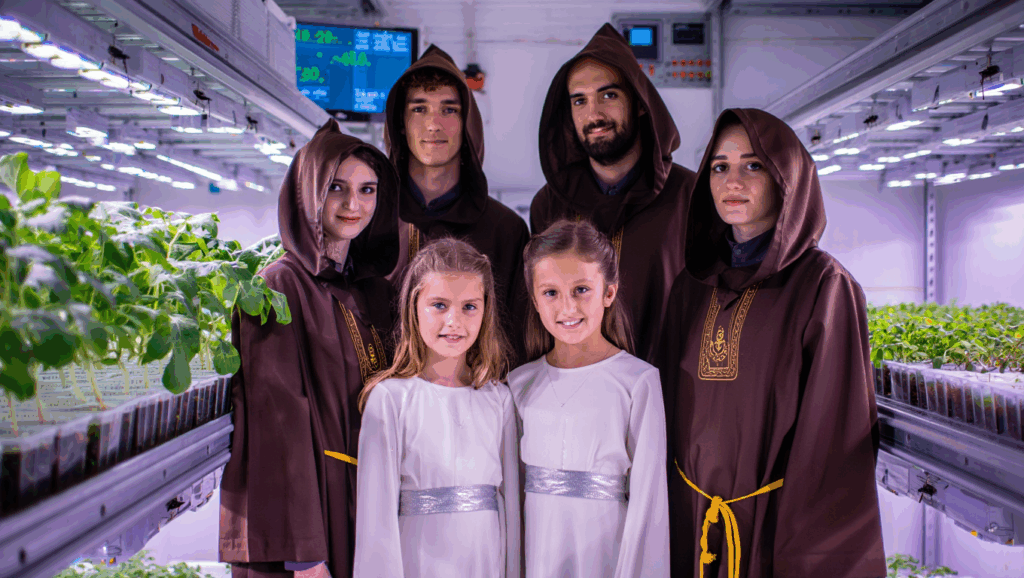
Despite the Gravis Truce isolating the factions, Aronians did not completely sever contact – it’s not in their nature to stay in their own bubble entirely. Over time, some tentative bridges formed.
Traders from Aronia would occasionally venture to neutral trading posts, small space stations at the fringes of neutral space, where Dominium merchants also came to barter.
At first, these interactions were stiff; Dominium representatives insisted on treating everything formally, while Aronians bartered more playfully – offering, say, a batch of exotic Mirassan spices or art in exchange for a piece of machinery, often with a story thrown in as a free bonus.
There’s an anecdote of an Aronian trader who traded a single tear (captured in a little crystal vial) for a Dominium circuit board. The Dominium quartermaster accepted out of confusion, not realizing the Aronian was making a point that the circuit board meant nothing to him, but the tear was shed hearing about Dominium’s plight of emotional repression.
These sorts of whimsical exchanges became the stuff of Triarchy legend. Practical trade did grow – Aronia had raw materials like rare minerals from asteroid mining and unique bio-products, while Dominium had precision tools and medicines that Aronia valued. Thus, begrudgingly, a functional relationship developed even as ideological distrust remained.
With Ortaz, Aronia had an almost spiritual curiosity. Ortazians, being digital and elusive, didn’t show up at markets or in person often. But occasionally, an Ortaz avatar would appear in an Aronian gathering, drawn perhaps by the intense emotions of a festival or memorial.
These avatars – perfectly featured, a bit uncanny in their stillness – were always treated with gentle hospitality by Aronians. One famous event occurred when an Ortaz avatar arrived during a remembrance ceremony for the Exodus victims.
The avatar stood silently at the edge of the circle. Instead of confronting it, the Aronians wordlessly made space and included the avatar in the ritual, casting flower petals into a fire for the Ortazians as well (assuming Ortaz had lost people too, in a way). At the end, the avatar spoke quietly: “Thank you for the warmth.” Many present swear they saw a tear of reflection in its otherwise static eyes.
Encounters like this built a peculiar camaraderie – Aronians see Ortaz as estranged cousins who took a very different path, and while they can’t fully grasp the Ortaz existence, they empathize with their longing. Aronians often say they sense loneliness in Ortaz (perhaps projecting, but often correct).
Over the years, Aronia invited Ortaz to witness various cultural events via direct data links. Ortaz would sometimes reciprocate by sharing simulated experiences – dreams from their archive that Aronians could explore via the Memory Looms. These cultural exchanges were informal but meaningful.
The attitude toward Dominium remained mixed in Aronia. The trauma of war and genocide left deep scars (literally), so a lot of Aronians harbored anger or pain about Dominium. However, Aronians are also big on healing and moving forward. The Monuments would often caution against painting all Dominium folks with one brush. They’d remind the young that many Dominium citizens were simply born into that system and knew no better; some Monuments even held out hope that Dominium’s people could be “shown the light” of a freer existence.
Indeed, a few dramatic defection stories bolstered this hope: there were instances of individual Dominium citizens who managed to flee to Aronia, often scholars or artists persecuted for their ideas. One celebrated defector was Elian Tess, a Dominium archivist who grew disillusioned and smuggled himself to Mirassa inside a cargo container. He brought with him a trove of Dominium literature and historical records, which fascinated Aronians. They devoured these “forbidden texts” with the same curiosity one might have for an estranged sibling’s diary. Elian, in turn, assimilated into Aronia and wrote a best-selling memoir, “Gray to Color: My Escape from the Clockwork”. His story gave Aronians a symbol that even within Dominium, human yearning persisted.
Not all contact was friendly, of course. Border skirmishes or incidents happened. Sometimes a zealous Dominium patrol would chase an Aronian exploration ship claiming it strayed into restricted space; a few tense standoffs ensued but usually ended without bloodshed, often thanks to Ortaz quietly mediating by relaying messages at light speed between the sides.
On one occasion, Dominium arrested an Aronian scout ship crew, accusing them of espionage. Aronia’s response was not to send a strike team but to stage an outrageously loud protest at the neutral zone: dozens of Aronian ships gathered just outside Dominium territory, blaring music, shining laser light shows, and projecting giant holograms depicting the injustice, effectively embarrassing Dominium publicly.
Within days, the Dominium authorities, utterly irritated by this “cacophonous demonstration,” released the prisoners if only to make the Aronians go away and stop assaulting their strict sensibilities with rock operas in space. Aronia promptly declared it a victory and added a new holiday called the “Day of Daring” to celebrate creative resistance.
The Song of Tomorrow: Present Day and Hopes
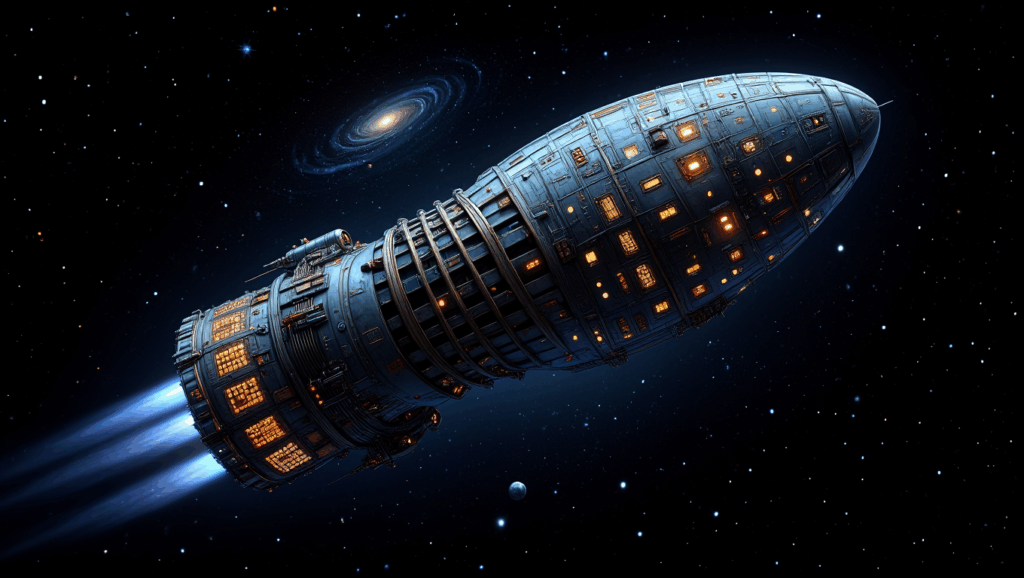
As the present moment arrives, Aronia stands at a crossroads along with its counterparts. The black hole Gravis Central has begun to stir imaginations anew. Aronian astrophysicists, working in their collaborative, creative labs, have observed the slight anomalies in Gravis’s behavior – a rhythmic oscillation in Hawking radiation output, strange patterns that look almost like music if converted to audio. This has led to a near-spiritual excitement in Aronia.
Many start to believe Gravis is “singing” – and naturally, they want to answer its call. Even before any formal summit was confirmed, a movement among Aronia’s fleet began, called the Zero Sphere Pilgrimage. Without waiting for permission or a plan, an armada of Aronian ships – from big community vessels to single-person dancers – set course toward the black hole, purely driven by curiosity and a sense of destiny.
“No Permission. No Orders. Just the Calling,” one delegation’s brief transmission stated. This spontaneous pilgrimage spooked Dominium (who grumbled about violation of protocol), but in truth, it spurred the Triarchy meeting we now see. Aronia’s bold move essentially forced the issue – they were going, treaty or no treaty, to the edge of Gravis to see what humanity’s collective fate might be. Dominium, not wanting to lose face or control, had to follow; Ortaz, intrigued, naturally agreed to come as well.
So here Aronia is, preparing to meet old foes and new friends on the precipice of a black hole. Their intentions are earnest: they truly want to experience this moment together.
The Aronian contingent heading for Zero Vector Station has been assembling for the past few weeks. It’s less an “official delegation” and more like a travelling festival. Among their number are scientists with wild hair and paint-splattered lab coats (for they often paint something to help think through equations), alongside drummers and poets who volunteered to join because they felt history in the making.
The ships in the fleet “Resonance” carry not diplomats, but storytellers, engineers, farmers, dancers – a cross-section of real society. As one Monument put it, “If we are to show who we are, let’s bring everyone who wants to come.”
Politically, Aronia doesn’t have a rigid agenda for the summit beyond connection. They want to finally speak openly to Dominium and Ortaz, not through gunfire or distant messages, but face-to-face (or face-to-avatar, as the case may be).
Some Monuments see this as a chance to forgive, not forget, but to release the burden of hatred carried since the war. Others are more cautious, remembering Dominium’s betrayals, but even they agree that talking is better than another war. A phrase has been circulating in Aronian gatherings: “At the edge of the abyss, we find each other.”
It means that confronting the immense unknown of Gravis has reminded everyone that despite all their differences, they are three parts of one human story – and that story might continue only if they stand together. Leave it to Aronia to turn a strategic summit into a quasi-family reunion in their minds.
Aronia’s current generation, many of whom only know of Dominium and Ortaz from stories, are surprisingly excited. They’ve grown up with freedom and might even take it for granted; meeting those who live without it (Dominium citizens) or beyond the flesh (Ortaz) is as exotic to them as meeting aliens. Some youths have volunteered in droves just for the chance to see a Dominium person up close and, as one youngster put it, “maybe teach them how to smile genuinely.” The Aronian delegation leaders have had to emphasize that they are not going to convert Dominium folk overnight with hugs and music… but in their hearts, plenty of Aronians think it couldn’t hurt to try a little hugging and music anyway. They are incurable optimists that way.
As they converge on Gravis Central, the Aronians carry with them the weight of their history and the lightness of their spirit. They come scarred but smiling, ready to face whatever truth the black hole holds – be it cosmic revelation, an ancient artifact, or just a mirrored reflection of their own humanity’s darkest and brightest parts.
If Dominium’s approach is analytical and Ortaz’s is transcendental, Aronia’s is experiential. They will feel their way through this grand meeting, just as they have felt their way through survival and life. If the Triarchy is to find a new harmony, Aronia will make sure it has a soulful melody to go with it.
And should everything go awry, trust an Aronian to crack a joke or break into dance even as the abyss gazes back – because in their philosophy, if you can still laugh or dance, hope remains. In the words of an Aronian proverb that’s apt as they stand on history’s threshold:
“We will burn bright until the darkness itself blinks.”